Save The Bees -
10 Simple Things YOU Can Do!
Updated: November 2023
We can all do our bit to help save the
bees. You do not need to become a beekeeper. Indeed, many other
pollinators (not just honey bees) are in serious decline too.
Law makers need to play their role too. In the USA, regulators in some states have used interesting means to protect species - see Are Bees Fish In California?
And with good cause!
For example, the Rusty patched bumblebee (Bombus affinis) - a once common species - is now on the brink of extinction, and has been declared endangered, with populations having plummeted by 90%.
Seven species of Hawaiian Yellow-faced Bees have to receive protection under the Endangered Species Act.
In the UK, some bumble bee species have gone extinct already, whilst a number of butterfly species are also struggling.
Many of the steps you can take to save bees, will help other pollinators too!
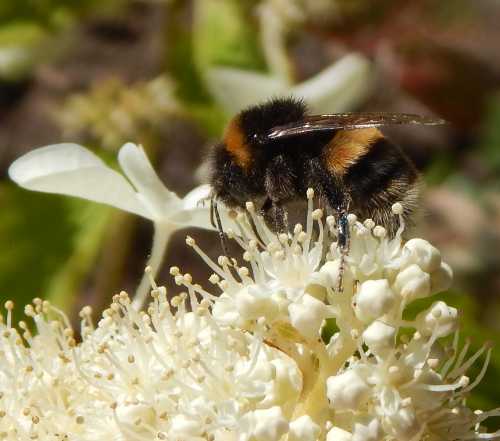 One of the best ways to help bees is to include flowers and shrubs in your garden that are rich in nectar and pollen.
Bees really are the 'canary in the coalmine' for many other species.
As such, the steps we take to enhance habitat for bees, will help other pollinators and beneficial invertebrates.
Never underestimate the importance of the steps you take in your own garden - if we all do our bit to create a 'feeding station', free of toxic poisons, then together we will gradually and increasingly create linked habitats, and we will help bees and other species to extend their ranges.
You CAN make a difference - and collectively we make a BIG difference!
1. Help save the bees by providing lots of the right flowers, over a long season
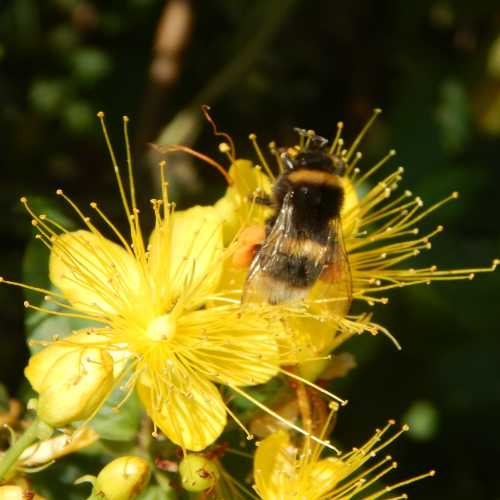 Provide a long season of nectar and pollen rich flowers for bees and other pollinators to feed on
Saving the bees starts with flowers!
- Provide a long season of nectar and pollen rich flowers for bees and other pollinators to feed on:
Ensure you have flowers, shrubs, trees and plants in bloom for as long as possible in the garden.
Some bee species emerge early, and will seek pollen and nectar sources provided by spring bulbs such as narcissus and crocuses.
Pussy willow, fragrant shrubs such as Sweet Box and herbs such as rosemary are also useful.
Some bee species will continue foraging late into the season too. Take a look at the following link (opens new window) featuring calendarised lists of great bee plants.
- Choose old fashioned blooms, cottage garden, and herbs
Herbs and heathers are generally great for bees, as well as traditional cottage style flowers (and whatever anyone says, they NEVER go out of fashion!). - Include wonderful wildflowers
Plant wildflowers in your garden, or even create a small wildflower area.
There are several ways you can make room for wildflowers in your garden, such as including a few in the border or pots, or take a look at these ideas for your lawn.
2. A little mud, a little bare ground, and a little water
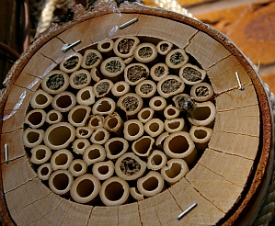 Mud and water are especially useful for species such as mason bees
Remember too that both a supply of water, perhaps in the form of a small wildlife pond or bird bath, and mud are useful.
Some bees, such as Mason bees, use mud for constructing their nests.
Mining bees make their nests in lawn or semi-bare ground, so please leave a patch of ground for them!
If you see little mounds of mud in the lawn with a hole at the top, this may well be the work of solitary ground nesters. The bees can be left alone - please don't use chemicals on your lawn.
3. Tidy away dead stalks - don't burn them
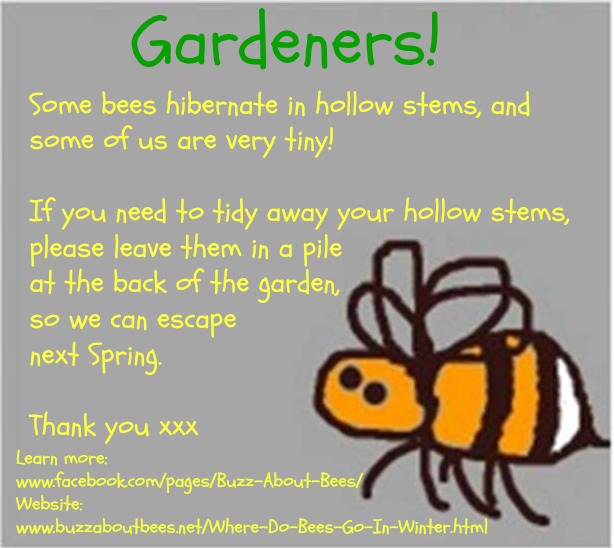
Old hollow stems of plants and shrubs may have tiny bees and other little creatures overwintering inside them. So if you are wanting to tidy your garden in winter, please don't burn the stalks.
If you can, please leave the stems on the plant until the following year. When you eventually do cut the stems, why not leave them in a pile at the back of the garden?
4. Save the bees - cut out the insecticides!
Some pesticides such as neonicotinoid insecticides, can
remain in the soil for years, and continue to be taken up by the plant from the soil.
Neonicotinoids work by creating a toxic plant: this group of insecticides is designed to poison the sap and nectar of plants, so that 'pests' which feed on the plant are poisoned. To read more, see this neonics snapshot.
Try natural methods of pest control - such as putting up bird boxes and blasting aphids with water. You could even site a ladybug / ladybird house near to the affected plant to eat the aphids.
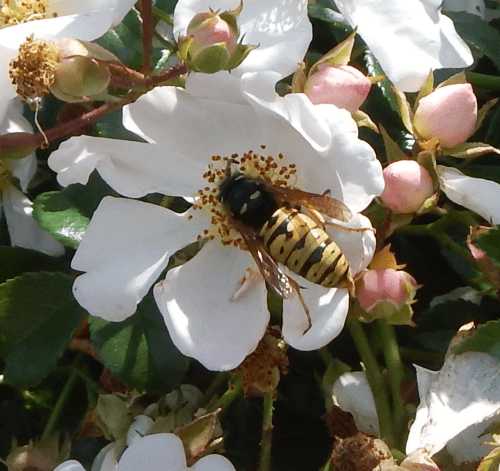
Also, remember that wasps are a gardener's friend and most insect species are beneficial or harmless.
5. Create and protect bee nest sites
A bundle of hollow canes could make a home for solitary bees. If you are making a solitary bee house, use untreated wood. Please don't use plastic containers, as condensation can occur. Tin cans also should not be used.
Alternatively, there are some well made bee houses available to buy, which make excellent gifts, especially for gardeners, or anyone who might be interested in observing bees.
Some bumble bee species will take up residence in bird boxes, or an upturned plant pot (with holes) provisioned with bedding, and located in a secure, shady area. Take a look at this useful bees nest Q&A.
If you come across a wild bee nest, please try not to disturb it. Bumble bee nests usually only last a season, and most solitary species are unlikely to cause problems.
Meanwhile, if you are concerned about a honey bee swarm or nest, contact
a local beekeeper so that if possible, the bees can be relocated to a safe and permanent place. Take a look at my information page about
bee swarm removal.
6. Spread the word!
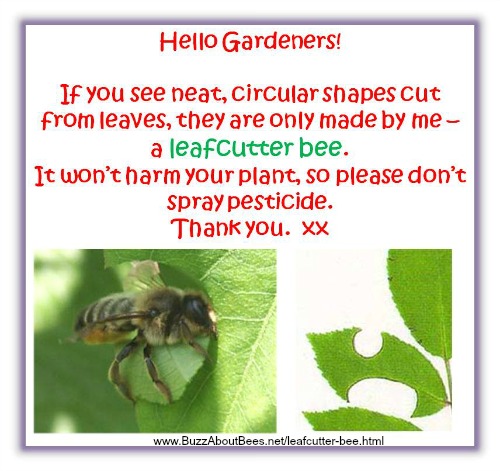
Spread the word about the need to help save the bees! This could range from sharing these tips to chatting with your neighbour or giving a talk about bees to local gardening groups.
Also, please let's inspire the next generation - the children of today are tomorrow's conservationists.
7. Carefully select your honey, honey!
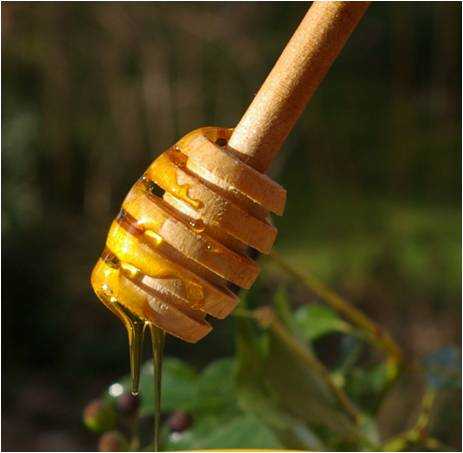 Is what you are buying really honey?
Is what you are buying really honey? If you are going to buy honey, if possible, buy local honey from a beekeeper you trust who cares about their bees. Contaminated honey may be cheaper, but guess what, there's a reason for it!
Cheap, contaminated honey creates pressure on beekeepers who are doing the right thing, and supplying the real product. Please check the label. See these honey buying tips.
8. Before you become a beekeeper, do some research
I adore honey bees, and have a whole page about why honey bees and beekeepers matter.
However, beekeeping in an environmentally sensitive area is not necessarily a good idea - for one thing, it could upset the balance for threatened wild bees, and even the balance of the local eco-system in the longer term. All bees are important.
9. Speak to your local council
Write to your local council or political representative.
- Tell them about the need to save the bees, and ask them to stop the use of pesticides in public spaces and on public owned and managed land (from parklands to community planting schemes).
- Ask them to include more bee-friendly plants, and shrubs, and to make space for wildflowers along verges etc - ask them to reduce the mowing.
- Bees love clover, and it's a great, low-growing, drought-resistant flower to include in lawn areas and along verges. Ask your council to use more clover.
- Ask them to put in place a strategy for pollinators.
See more ideas about how councils can help to prevent bee decline.
10. Help save the bees...... by eating organic where you can
Perhaps now is the time to start growing your own pesticide-free fruit & veg? You'll be surprised just how many salad leaves and green beans you can grow - even in a few pots outside!
If you cannot grow your own, then try to select as much organic produce as you can when you are buying your shopping - even if it's just one item, because collectively, we do make a difference.
When you spend your cash, you cast a vote.
If
you buy at least some organic produce, your purchases, along with those
of others, will send a signal to retailers, which will ultimately send a
signal to farmers.
It's as simple as that!
Thank you for caring about bees - take a look around this website for more hints.


If you found this page helpful or interesting, I'd really be grateful if you would share it with others - if not this page, perhaps another, such as Gardening For Bees.
Thank you so much :) .