Flower Bulbs And Corms For Bees
I have several types of flower corms and flower bulbs for bees in my garden, from winter flowering Crocus, snowdrops and traditional daffodils, to Spring muscari, hyacinth, iris and bluebell.
During the summer, up come the alliums and Crocosmia (Crocosmia are okay in my experience, though not fantastic - but since they arrived in my garden I've always had them).
If you’d like to know which bulbs to plant for bees, read on, as well as tips for buying.
Bulbs and corms (and tubers and rhizomes) are quite versatile. Some are great in
lawns,
such as snowdrops, some species of short stemmed fritillaria, and of course, crocus, also work well in lawns and at the front of borders, between clumps of flowers.
There are flower bulbs that will grow quite well in areas that we might call
problem places
in the garden - such as shady spots.
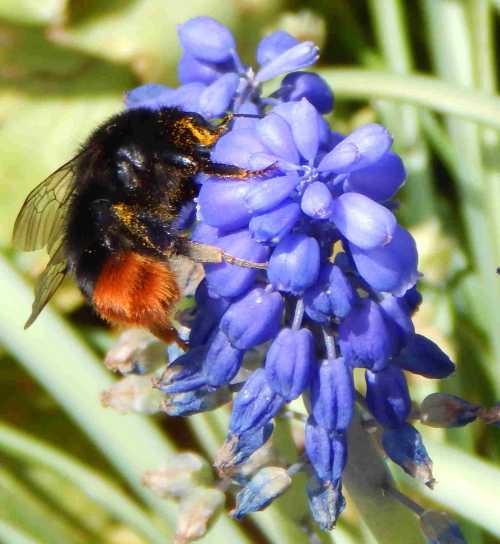 Muscari - lovely fragrant bulb, easy to grow and share with family and friends - works well in pots too!
If you have a
shade garden,
(for example, a shady spot beneath the trees) – wood anemone, snowdrop,
cyclamen, blue bell and winter aconite are treasures for any gardener
with these conditions.
I love the large, showy summer flowering bulbs too, such as
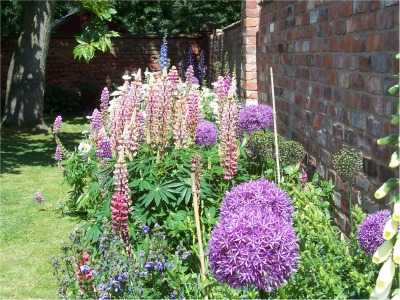
the tall alliums and agapanthus that look beautiful in the border, and
tend to be quite long flowering.
It’s not unusual to see large allium heads with several bumble bees feeding on them at once, and honey bees eagerly drinking nectar from agapanthus.
So in
summary, I recommend flower bulbs for bees, because they are generally
very easy to grow, and most people can accommodate at least some flower
bulbs liked by bees whether they have a large
bee garden,
or just a pot of hyacinths and crocus by the front door.
Bulbs are often good value too. I love the fact that you can divide up your muscari, snowdrops and crocosmias, so that you end up with free plants you can swap with others or transplant elsewhere in your garden.
In summary, here is a list of easy to grow flower bulbs for bees:
Winter Flower Bulbs For Bees:
Glory of the snow (Chionodoxa spp.)
Snowdrop
Winter Aconite
Spring Corms And Bulbs For Bees:
Crocus
Cyclamen corm (can flower from January)
Daffodil
Fritillaria
Hyacinth
Iris
Muscari
Siberian squill (Scilla siberica)
Wood Anemone (anemone nemorosa)
Bluebells
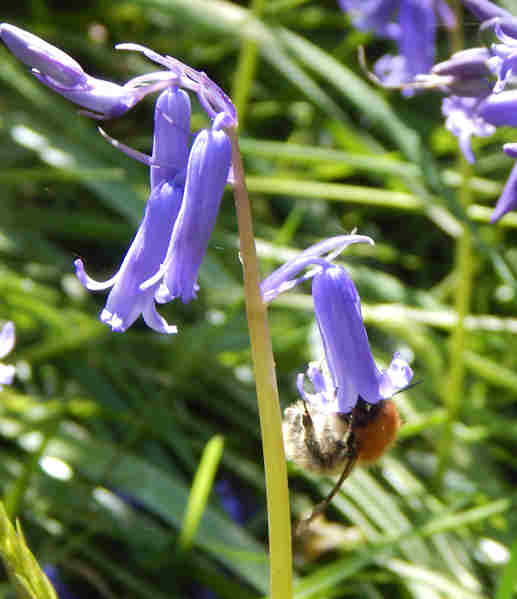 Bumble bee foraging on English bluebell. Blue bells grow very happily in dappled shade beneath the trees to the rear of our garden.
Summer Corms And Bulbs For Bees:
Agapanthus
Allium
Crocosmia
Foxtail Lily
Ornithogalum (Star Of Bethlehem)
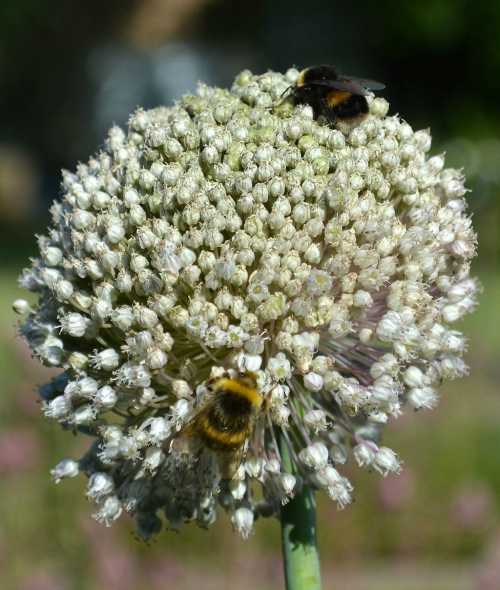 Bumble bees love alliums!
Create a
lawn for bees
If you found this page helpful or interesting, I'd really be grateful if you would share it with others - if not this page, perhaps another, such as Gardening For Bees.
Thank you so much :) .